

Diets That
W
ork


Three day Detox
That's all it takes to flush away years of accumulated waste & toxins.
Boost your energy levels and melt away stubborn fat, without starving your body!
Have you got 3 days?
That’s all it takes.
Just 3 days for a full Detox!
Three days to get rid of the dangerous toxins and flush poisonous substances out of your body! Boost your energy levels fast so you don`t feel wiped out and utterly exhausted all the time.
Harmful toxins get into your body through the pesticides that are found on your food, in your water, and as a part of many soaps and shampoos, cosmetics, fragrances. Even the air and fumes in our cities that you inhale.The sad fact is, that you can’t just get away from toxins; — toxins are EVERYWHERE.
Undo the damage that toxins do.
Transform your body with a detox.
The Bikini Body detox is a natural, nutricious cleansing programme. This will give your body exactly what you need to flush out all the toxins and boost your metabolism at the same time.
I guarantee you’ve never used anything like this before. It’s a proven 7 day program to give you the most outrageous results in the shortest time possible. Follow it exactly and you will instantly melt fat, boost your metabolism and look and feel more youthful and energetic.
The Bikini Body Detox is not like so many other programs, which leave you grumpy and hungry or require you to resort to powdery shakes, pills and expensive equipment.
Danette May
Have you got 3 days?
That’s all it takes.
Just 3 days for a full Detox!
Three days to get rid of the dangerous toxins and flush poisonous substances out of your body!
Boost your energy levels fast so you don`t feel wiped out and utterly exhausted all the time.
Harmful toxins get into your body through the pesticides that are found on your food, in your water, and as a part of many soaps and shampoos, cosmetics, fragrances. Even the air and fumes in our cities that you inhale.The sad fact is, that you can’t just get away from toxins; — toxins are EVERYWHERE.
Undo the damage that toxins do.
Transform your body with a detox.
The Bikini Body detox is a natural, nutricious cleansing programme. This will give your body exactly what you need to flush out all the toxins and boost your metabolism at the same time.
Whether it’s a summer beach barbecue, a winter holiday party, an after work happy hour or a quiet dinner for two, alcohol and your diet can be an issue.
Have you got 3 days?
That’s all it takes.
Just 3 days for a full Detox!
Three days to get rid of the dangerous toxins and flush poisonous substances out of your body!
Boost your energy levels fast so you don`t feel wiped out and utterly exhausted all the time.
Harmful toxins get into your body through the pesticides that are found on your food, in your water, and as a part of many soaps and shampoos, cosmetics, fragrances. Even the air and fumes in our cities that you inhale.The sad fact is, that you can’t just get away from toxins; — toxins are EVERYWHERE.
Undo the damage that toxins do.
Transform your body with a detox.
The Bikini Body detox is a natural, nutricious cleansing programme. This will give your body exactly what you need to flush out all the toxins and boost your metabolism at the same time.

Cut back on Alcohol
Cutting back on alcohol can improve your health, mental and physical well-being. There are plenty of practical ways you can start to cut down and stay on track.
See this excellent advice from the 'Drinkaware' organisation, which can be very helpful in helping you to control the consumption of alcohol while trying to follow a diet. Many Diets that work include a small amount of alcohol, as this helps a lot of people's bodies believe that they are not on a diet at all and everything is normal. One of the secrets of any diet is to not SHOCK your body, but to convince your system that everything is normal.
Alcohol Addition?
Get help Now Tel 0800 111 4108
Drinking more water can help your health in so many ways.
A GLASS OF
WARM WATER?
You should try and drink your water WARM and not ice cold. the biggest advantages of drinking water warm is that it can help 'jump start' your metabolism. Drinking warm water has also been proven to be very soothing for the digestive system and for the body's muscles.

Water retention occurs when excess fluids build up inside the body. Many parts of the body can retain water; the most visible is often the legs, either in the thighs, around the knees or around the ankles.
Water retention is also known as fluid retention or edema. Water retention occurs in the circulatory system or within tissues and cavities. It can cause severe swelling in the hands, feet, ankles and legs which if untreated can be very painful and make you quite immobile.
Many pregnant women suffer from water retention and its common in those who are not very physically active or are bed-ridden. It can however also be an early sign of kidney disease or even heart failure. Anyone having very sudden water retention should seek medical advice.
Check the sodium levels of food and drinks before you buy them. You can help balance your sodium by eating potassium-rich foods like bananas and spinach, and drinking plenty of water.
If the swelling is mild and no other health condition is suspected, then the water retention can be countered by a few of the methods below, or by medication, such as WATER OFF.
Ways to reduce water retention.
1. Eat Less Salt. Salt is made of sodium and chloride. The sodium binds water into the cells in the body.
2. Increase Your Magnesium intake. Magnesium is a very important mineral and if your diet doesnt include it you should find a way of taking some on board.
3. Increase Vitamin B6 Intake. Vitamin B6 is a group of several related vitamins.
4. Eat More Potassium-Rich Foods. Among the most often found foods that are high in potassium are Tuna (not if it is packed in in brine which neutralises most of the good effects), Salmon, Yoghurt, Fat-free milk, Eggs, Macadamia nuts, Almonds and Mushrooms.
5. Try Taking Dandelion. This herb has long been used as a diuretic to reduce water retention. It's normally takes as a leaf extract.
6. Avoid Refined Carbs. Any high carb food will spike blood sugar levels and can boost insulin levels. High insulin levels trigger sodium-retention which leads to more fluid volume inside the body. Refined carbs such as processed sugar and grains, for example the white flour in bread, can cause water retention
Water is in your blood, muscles, organs, and it is even present in your bones! We all need water You need it for almost everything you do, but sometimes we get too little or too much. Do YOU know how much is too little or too much?
You should as the amount of water you drink and the amount of water you extrete can have a profound effect on your metabaolism, on your weight and your shape. It can also affect your health.
Sometimes however, your body holds on to too much of it. This is water retention, and it causes puffiness and swelling. It can be triggered by many different things.
Drinking water helps your body maintain the right level of fluids.
Everyone's body comprises betyween 60% and 80% of its weight in water and mixtures of bodilly fluids. The functions of these bodily fluids include such everyday essential processes of digestion, absorption, circulation, creation of saliva, transportation of nutrients, and maintenance of body temperature
The body loses water through breathing, sweating, and digestion, which is why it's important to rehydrate by drinking fluids and eating foods that contain water. Every cell in your body uses water and its found in all the body's organs and throughout all the body tissue where it will help regulate your temperature and maintain other bodily functions.
SODIUM IN YOUR WATER?
Everyone's body needs sodium. It plays an important part in regulating blood pressure and fluid levels. While its an essential ingredient, the body doesnt need a lot of sodium; just a little is quite enough. The daily recommended intake is about 1500mg a dsy, certainly no more than 2300mg.
1500 mg of sodium is approximately to 0.75 teaspoons or 3.75 grams of salt per day, and that 'upper limit' of 2300 mg amounts to one teaspoon or 6 grams of salt per day.
Most people today are eating much more than that. The average intake of sodium is about 3400 mg, most of it coming from processed foods. When your body finds that you have too much sodium in your system, your body will retain water. Table salt is one of the main sources of sodium, however there is much more sodium found in things like luncheon meat, biscuits, bread,crisps, , canned vegetables and soups and especially fast food. Usually salt is added to food to mask unpleasant tastes, or to preserve the food and make it remain suitable for consumption a little longer. Even soft drinks contain salt - have a read of the can next time you drink one.
Water and the Skin
.Drinking at least eight glasses of water a day will help rid the body and skin of toxins. Not everyone will agree that water consumption will improve skin but it certainly can't hurt. Many people often report that by increasing their water intake, their skin has a more radiant glow. Remember: water is essential, so drink as much as you can!

Water off
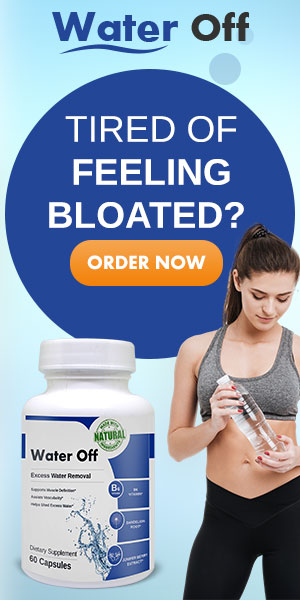
Water Off is an oral dietary supplement designed to shed excess water from the body. While our bodies need water to function, sometimes we can hold too much, this is described as water retention.
Water retention can cause swelling, puffiness and bloating. For many people this can be painful while also having a negative visual impact on the person’s appearance. Water retention can be caused by a number of things; the most common are hormonal changes within women, medications, long distant travel and diet. Water Off is the ideal solution - click HERE for more details.

Water Retention

Colon Detox Plus
This is is the natural way to cleanse the colon of harmful toxins, which are associated with bloating and constipation. Used by thousands to kick-start weight loss programmes, Colon Detox is the safe natural way regular clean your colon.
Colon cleansing has become a hot topic within the medical community, however the practice of natural colon cleansing dates back to ancient Greece before becoming popular again in the 1920’s and 1930’s.
The theory of autointoxication is the belief that undigested foods can cause the build up of toxins, which enter the blood supply poisoning the body.
SODIUM IN YOUR WATER?
Everyone's body needs sodium. It plays an important part in regulating blood pressure and fluid levels. While its an essential ingredient, the body doesnt need a lot of sodium; just a little is quite enough. The daily recommended intake is about 1500mg a dsy, certainly no more than 2300mg.
1500 mg of sodium is approximately to 0.75 teaspoons or 3.75 grams of salt per day, and that 'upper limit' of 2300 mg amounts to one teaspoon or 6 grams of salt per day.
Most people today are eating much more than that. The average intake of sodium is about 3400 mg, most of it coming from processed foods. When your body finds that you have too much sodium in your system, your body will retain water. Table salt is one of the main sources of sodium, however there is much more sodium found in things like luncheon meat, biscuits, bread,crisps, canned vegetables and soups and especially fast food.
Usually salt is added to food to mask unpleasant tastes, or to preserve the food and make it remain suitable for consumption a little longer. Even soft drinks contain salt - have a read of the can next time you drink one.
Water is in your blood, muscles, organs, and it is even present in your bones! We all need water for almost everything we do, but sometimes we get too little or too much. Do YOU know how much is too little or too much?
You should as the amount of water you drink and the amount of water you expel can have a profound effect on your metabaolism, on your weight and your shape. It can also affect your health.
Sometimes however, your body holds on to too much of it. This is water retention, and it causes puffiness and swelling. It can be triggered by many different things.
Drinking water helps your body maintain the right level of fluids.
Everyone's body comprises between 60% and 80% of its weight in water and mixtures of bodily fluids. The functions of these bodily fluids include such everyday essential processes of digestion, absorption, circulation, creation of saliva, transportation of nutrients, and maintenance of body temperature
The body loses water through breathing, sweating, and digestion, which is why it's important to rehydrate by drinking fluids and eating foods that contain water. Every cell in your body uses water and its found in all the body's organs and throughout all the body tissue where it will help regulate your temperature and maintain other bodily functions.
.
Have you got 3 days?
That’s all it takes for a full Detox!
Three days to get rid of the dangerous toxins and flush poisonous substances out of your body!
Boost your energy levels fast so you don`t feel wiped out and utterly exhausted all the time.
Harmful toxins get into your body through pesticides on your food, in your water, and as a part of many soaps and shampoos, cosmetics, fragrances. Even the air and fumes in our cities that you inhale.The sad fact is, that you can’t just get away from toxins; — toxins are EVERYWHERE.
Undo the damage that toxins do.
Transform your body with a detox.
The Bikini Body detox is a natural, nutricious cleansing programme. This will give your body exactly what you need to flush out all the toxins and boost your metabolism at the same time.
Water retention occurs when excess fluids build up inside the body. Many parts of the body can retain water; the most visible ios often the legs, either in the thighs, around the knees or around the ankles.
Water retention is also known as fluid retention or edema. Water retention occurs in the circulatory system or within tissues and cavities. It can cause severe swelling in the hands, feet, ankles and legs which if untreated can be very painful and make you quite immobile.
Many pregnant women suffer from water retention and its comm on in those who are not very physically active or are bed-ridden. It can however also be an early sign of kidney disease or even heart failure. Anyone havinbg very sudden water retention should seek medical advice.
Check the sodium levels of food and drinks before you buy them. You can help balance your sodium by eating potassium-rich foods like bananas and spinach, and drinking plenty of water.
If the swelling is mild and no other health condition is suspected, then the water retention can be countered by a few of the methods below, or by medication, such as WATER OFF.
Ways to reduce water retention.
1. Eat Less Salt. Salt is made of sodium and chloride. The sodium binds water into the cells in the body.
2. Increase Your Magnesium intake. Magnesium is a very important mineral and if your diet doesnt include it you should find a way of taking some on board.
3. Increase Vitamin B6 Intake. Vitamin B6 is a group of several related vitamins.
4. Eat More Potassium-Rich Foods. Among the most often found foods that are high in potassium are Tuna (not if it is packed in in brine which neutralises most of the good effects), Salmon, Yoghurt, Fat-free milk, Eggs, Macadamia nuts, Almonds and Mushrooms.
5. Try Taking Dandelion. This herb hjas lomng been used as a diuretic to reduce water retention. It's normally takes as a leaf extract.
6. Avoid Refined Carbs. Any high carb food will spike blood sugar levels and can boost insulin levels. High insulin levels trigger sodium-retention which leads to more fluid volume inside the body. Refined carbs such as processed sugar and grains, for example the white flour in bread, can cause water retention
Water is in your blood, muscles, organs, and it is even present in your bones! We all need water You need it for almost everything you do, but sometimes we get too little or too much. Do YOU know how much is too little or too much?
You should as the amount of water you drink and the amount of water you extrete can have a profound effect on your metabaolism, on your weight and your shape. It can also affect your health.
Sometimes however, your body holds on to too much of it. This is water retention, and it causes puffiness and swelling. It can be triggered by many different things.
Drinking water helps your body maintain the right level of fluids.
Everyone's body comprises betyween 60% and 80% of its weight in water and mixtures of bodilly fluids. The functions of these bodily fluids include such everyday essential processes of digestion, absorption, circulation, creation of saliva, transportation of nutrients, and maintenance of body temperature
The body loses water through breathing, sweating, and digestion, which is why it's important to rehydrate by drinking fluids and eating foods that contain water. Every cell in your body uses water and its found in all the body's organs and throughout all the body tissue where it will help regulate your temperature and maintain other bodily functions.

Water
Discover how many of today's 'health foods' can be making your fat cells sick and actually stop you losing weight.
the book cover for information


Sobriety Calculator
In simple terms, a sobriety calculator is an app designed to help you keep track of your sobriety. If you are starting your sobriety journey, you will need to input your start date and time. If you already began your sobriety, you can also have an input of the time and date you started. Once you do this, the sobriety calculator will help you know the years, months, weeks, hours, and even minutes that you have stayed sober.
Click Here for a FREE AP